Hot passionate conservatives and icy-cold liberals
Posted by Carol Howard Merritt on 14 Apr 2009 at 12:33 pm | Tagged as: church, pastors, progressive christianity, salaries

CC Pastor (which, I’m assuming from the context stands for Calvary Chapel) wrote a good comment, which I replied to, but there was so much there, that I thought we could discuss it more in depth. If you’re not into reading 38 comments, you can get the general context here.
Mark let me suggest this connection. Ms. Merritt attended a large Calvary Chapel. She considered herself smarter than the pastor there. Assuming this is true and she is not just proud [author aside: this is a very generous assumption!] why then are Calvary Chapels growing and the PCUSA shrinking? Is there something wrong or missing in the training and education that Presbyterian(USA) pastors are receiving? I think the problem is you can not replace passion with education, training or technique. There is something about conservative theology that changes the hearts of people. We may not like the fact that the PCA is opening churches where we are closing churches. Or that the Bible is not always politically correct. Or that most large and growing churches are conservative churches. Or that conservative church inspire people to give more enabling them to support their pastors.
There is in this comment the presumption that many people make: conservative churches are passionate, large, growing, and inspiring, and conservative theology changes the hearts of people.
I certainly don’t deny that. There was an emotional intensity in the congregations of my youth that I don’t experience now. But, I have to say that I’m relieved. I had to leave my conservative congregation, after witnessing a great deal of abuse (and I don’t use that term lightly) to my friends and family. I needed a congregation that recognized my call into ministry, even as a woman. And I needed a place where the church did not center around a man who was a charismatic performer, yet very aloof pastor.
I am thankful for my conservative colleagues. They are reaching out to a group that I do not have the ability to minister to. And that’s okay. We are welcoming people into our growing, vital congregation who would never feel comfortable in a CC church.
The thing I do want to think about here is that underlying this assumption that often goes with the thought that conservative churches are passionate, large, growing, and inspiring. And that is that all mainline churches are shrinking, closing, unable to support their pastors. That education ruins good ministers.
All congregations have a life-cycle. Even mega-churches. In the laid-back beach culture of the 70s and 80s, I saw them spring up quickly, and I saw them wither and die at the same rate. About half of new congregations either grow or they don’t.
Most of our mainline denominational churches were founded during the post-World War II boom. It was a very exciting time for our denominations, one of great expansion. The Builders of that generation worked hard, constructing beautiful church buildings in our downtowns.
But we did not fare well in the seventies. Many of the Boomers did not want to go to their parents’ church. They wanted something radically different—a personal faith. Things were changing, and so the wonderful evangelical tradition in our country began to meet their needs in a way that mainlines could not. Conservative evangelicals began to plant churches at a rapid pace, and the congregations, which were not formed with the cultural expectations of the fifties, were much better at meeting the needs of a new generation.
Childcare was never questioned, youth and campus ministries were supported, and mothers were not expected to take on a load of volunteer work for an older generation. There was a shift in emphasis from being baptized into a household of faith to an intensely personal decision, to accept Jesus in your heart as your personal Lord and Savior. There were in many cases, no committees, and (I’m sure CC Pastor is right, although no one every knew exactly what our pastor made) it was never questioned that pastors would make a lot of money.
The PCUSA has a couple million members and we came to this country along with the first settlers. We, like all mainline denominations, realize the cultural changes that are happening within and around us. As a tradition that has been around for almost 500 years, we are well-acquainted with the cycles of life of any body. We know that, just as new companies grow faster, new churches grow faster. We also know that the most stable and profitable companies have been around for a long, long time, and we pray that it is the same for our denominations.
And so, we are closing congregations and planting new ones. Some of those older churches, which were situated downtown, are finding new vitality with people a new generation. Another shift is occurring as some of the men and women who grew up in the folding metal chairs, in rock-concert churches, with charismatic pastors are slipping out the back door and finding an (often uncomfortable) spot in the pews of our sanctuaries. They’re looking for a church that they can be a part of, even if they didn’t vote for McCain/Palin. They are longing progressive theology that affirms women, cares for creation, feeds the hungry, and honestly wrestles with the fact that the Bible is not always politically correct.
I am not sure how this will play out. Will our congregations welcome them? Will we be too arrogant about their own educations, financial security, and denominational pedigree to open our doors to their energy, ideas and leadership? We’ll see…
Different religious movements spring up, and others die. It doesn’t depend on how much education or passion that a pastor has. It depends on how the Holy Spirit is moving, how different demographics are playing out, and what our philosophical milieu is as a culture. And, whether our tradition is on the growing trend or the shrinking one, I do hope that we can all the humility to appreciate what God is doing in each time and place.
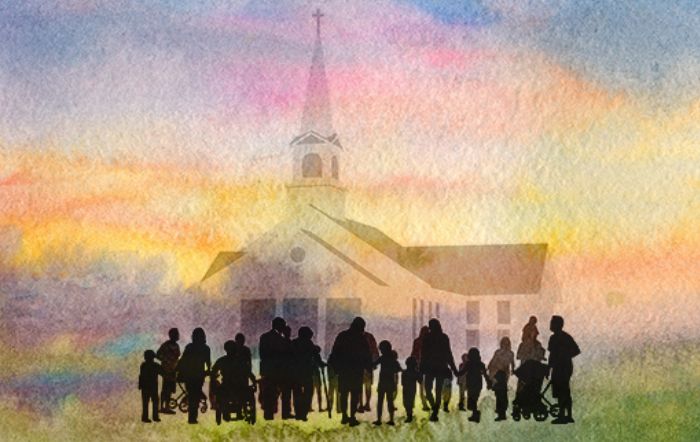
photo by dragonballyee

I always am amazed at the sanctimonious attitude that some evangelicals have about growth. In my reading of scripture growth is a mixed bag. It is not always a sign of God’s hand. There were plenty of churches growing in the early church that needed letters to bring them back from their excesses. Plus, there were many times the Word was rejected by the secular and pious. Good news is more important than growth. I also think that humility is a key sign that the Spirit is moving and not just hot air.
When confronted with that all-growth-is-good attitude on the part of some conservatives, I tend to have two responses. The first involves the magic words “Joel Osteen.” The second is simply noting that the fastest growing fellowship in the United States is the Mormon church.
Material success has never been a measure of Christian victory…at least, not if we have the cross as a standard. Brian’s right about some of these folks needing to spend a little more time reading 1 and 2 Corinthians.
My criticism (to which the person quoted in today’s post was responding) about what I perceived as the off-topic comments in the previous thread notwithstanding, this is a discussion worth having. I want to focus on something CHM touches upon very briefly in her post here, but it may be off of the main point itself, so if this is inappropriate, please accept my apologies in advance:
I’d like to see some discussion over the idea that “education ruins good ministers.” Some in the “liberal” camp argue that conservatives are anti-intellectual. Conservatives often rightly protest such an assertion, although I do see occasions (such as the previous thread) where conservatives will assert that liberals don’t preach the Bible anymore, but rather preach some other agenda (which may or may not be “intellectual,” but in any event the problem would seem to be not whether or not a preacher has been trained, but whether they have been trained in the right things: i.e. what the Bible itself has to say about any number of issues). Liberals, again, could rightly dispute whether or not preaching which reflects a disagreement on biblical interpretation is a failure to preach what the Bible says. I could go on….
(As an aside, I truly dislike the labels of conservative and liberal, because their use implies that there are two, and precisely two, camps of thinkers on these issues. This is obviously not the case. I am more conservative than CHM on a few issues, even as I am clearly more liberal than some of the folks who have commented on those same issues.)
The question here is, do these differences of theological leaning have an impact on church growth and, if so, is that something to be concerned about? How, then, should we respond?
I believe you mean Crystal Cathedral, look at the photo. -
You may be missing the point. It’s not about passion, but about the presence of the Spirit remaining in a church. Our PCUSA appears to be losing the Spirit because it is becoming apostate in its beliefs. We can talk about the natural life span of churches till kingdom come; in my own experience as a pastor in Scotland and the United States, churches that die are spiritless.
You know, we’re just going to have to disagree on that one. When one is accused of being apostate, I’m not sure there’s any room for discussion. I can say ’till I’m blue in the face “I’m not. I take the Bible as seriously as you do. I just disagree on matters of interpretation,” but I just don’t see us getting anywhere.
If you are considering the life-cycle of a church/denomination based on the recent history that is a bit short for Presbyterians.
This discussion has parallels all the way back to the Old Side/New Side Presbyterian split of 1741 when there was a disagreement over “experiential” requirements for ordination. Was ordination just about education or did a pastor have to have a definite conversion experience? Old Side hung onto education, New Side wanted the passion.
Mark, I take apostasy to mean abandonment of a previous loyalty, just as Webster’s dictionary does.
I think that our present course in the PCUSA is leading us away from our loyalties to God. We appear to be more faithful to modern biblical scholars rather than the original Gospel writers. That seems ludicrous to me and the effect upon the church is disastrous.
I have seen too many churches on both sides of the Atlantic die because of a liberalist theology which has no passion or spirit. You may think otherwise, but the dwindling numbers in our denomination tell a different story.
Buzz said, “I believe you mean Crystal Cathedral, look at the photo. -”
Actually, that picture just came up on flickr when I searched for “megachurch.” It’s such odd and amazing structure. I’ve never been there….
Stushie,
I should be deeply offended that you question my loyalty to God, based on my stance on a few theological/political points. But… I guess we’ve had this conversation a few times on my blog, so I’m not surprised. I am sad though. These are the sort of assumptions that people make of progressives; the caricatures that we draw of the other so that we feel better about ourselves.
But, in case your worried about me, my loyalties are most certainly with God. I have dedicated my life’s work to serving God, as have many of my progressive colleagues.
Steve,
I was talking about the life-cycle of a particular church. How long is that in our modern culture? Anyone know?
The Old Side/New Side parallels are fascinating….
Mark-
I think your point is well taken. I don’t think however you would ever find ex-evangelicals like Carol or I questioning the intellectual capacity of our former compatriots. As a matter of fact I found my classmates at Moody to be much more intellectual than many that I have walked in faith with since. It makes me quite upset to see that prejudice bantered around.
Stushie-
Since when did we start getting our theological reflections from Webster or the head of the lay committee for that matter?
I was just telling an elderly woman who was dying that she was suffering and dying because she didn’t love Jesus enough. I said “look my lungs are at 100 percent and yours are filled with cancer.” This is because I have the Spirit in me and you don’t. Thanks for confirming that what I said was right.
Brian,
I don’t think however you would ever find ex-evangelicals like Carol or I questioning the intellectual capacity of our former compatriots.
I tried to be pretty careful to say “some” when I made that generalization. Suffice it to say, I’ve seen it happen, but would be careful about saying that of any particular “liberal” without evidence to back it up.
Even so, my apologies for any offense at being lumped together unfairly. My intention was simply to point out that we make assumptions on both sides of the spectrum.
I think we would all agree growth does not make right. Early in my ministry I met an older preacher who had welcome black people into his church in the south and it did not grow! But growth is normally a sign of something happening. That something may or may not be good.
I think that conservative churches will grow because they are being true to historic Christianity and God will bless that and people will respond. Ms. Merritt, if 20 years from now progressive church are closing and conservative church are growing will that change what you think?
I am sorry you were abused by conservative churches. I do think there are people who take advantage of sincere people in conservative churches. I think it is why there are so many financial scams in conservative churches. But that is not really the issue here.
I do think there is a difference between affirming people and making a place for the Holy Spirit to change the hearts of people. I am sure that if I gave everyone a joint who came to the church I serve every week we would be full. What was it in historic Christianity that changed people into something more than they were. Does progressive or liberal or whatever term you use produce this? People who gave up all. When you inspect the fruit what do you fine.
As a side note, I do not think it was mainline, educated churches that were first empowering women, but Nazarene, Pentecostal and other Holiness groups.
In our congregation, I find people who gave up all to serve the poor. I find lives changed and people healed on a regular basis. In our basement, I find people who are working to serve the homeless, getting up at 6:00 am, making sure that 200+ people are fed every morning. I find people who discover treatment programs for drug and alcohol abuse. Men and women are finding shelter. I find children in transitional housing being taught art.
I’m also finding some of the assumptions and accusations about our ministry and church, very disheartening.
Living faith
By your logic I am glad to see you affirming that something is happening through Mormans, Buddhists and the nonreligious. They are all rapidly growing groups in the U.S. I think that it is the evangelicals who have abandoned the historic faith for a belief in individual faith. They have allso abandoned the historical Presbyterian idea of predestination for an Oprahfied idea of choosing Christ. This radical individuality is conforming to the world and fails the biblical test of the Spirit.
Carol–
I honor your calling, and your conviction, even as we disagree on some of the issues before us. Don’t forget that I am out here, and others like me are out here, too.
I’ve posted some thoughts about what I’ve read over on my blog. To Mark, Brian, Stushie– all of you. I give thanks to God that we are brothers and sisters in Christ.
Clay-
Sorry if you have taken offence. Sometimes I let my passion (yes it is something us liberals have) gets the best of me.
Just to be clear, the days of some of us liberals ceding God to evangelicals is over. The fact that people can come to Carol’s blog and say that she or people like her are apostate, lost the Spirit of God, unbiblical, lacking in passion and spiritually suspect is in my mind highly offensive. I think that there were conservatives who read this blog that were just as offended. I would ecourage this type of unity against ugliness in regards to the slanderous hatred that the layman prints.
I need to apologize and beg off.
My journey has been on the same road as Ms. Merritt but in the different direction. This Blog was suggested to me. I did not mean to be offensive. I do not know how to address this without bringing into question or challenging where you stand. It is confusing to me that someone could choose liberal/progressive theology over conservative theology. My Presbyterian up bring was so lacking to me and the little Assembly of God church where I made an adult confession of faith has so totally changed who I am. That being said it appears you could say something similar. Is it possible that we both have just reacted to how we were raised? Is there one that God is more pleased with? If so, that is what I want to do.
I am truly happy that people are meeting God and following him in your church. It sounds like there are many wonderful outreaches there.
God Bless
The truth always offends when people reject it. Perhaps instead of reading my comments, we should all start reading Tertullian. We are living in heretical times and bordering on apostasy.
Heresy always begins within the church. Whether you are offended by this or not, is solely up to you. I speak plainly because this liberal progressivism is destroying the mainstream church. It may be fun to share it at seminary, but grass roots folks look for Gospel truth, not academic theories.
Stushie, you must have misunderstood. I said that I was not offended. I’m at peace with God, and peace with my neighbors, even when we don’t believe the same things.
Good night, Stushie.
Living Faith wrote, “Is it possible that we both have just reacted to how we were raised?”
Maybe. I wonder about that a lot. For me, it was a couple of things–having a calling and not being able to fully live it out, the abuse and having no form of discipline to respond to it, and I first experienced grace through the Presbyterian Church. I really did not understand grace before I went there.
Oh, and I know all about Aimee Semple McPherson and I know how Moody had peaching classes for women, but the Evangelical churches that I grew up in had no such opportunities for women. We were being told to graciously submit. The mainline did though.
“Is there one that God is more pleased with?”
I don’t think so. But, who knows. My thoughts are not God’s thoughts…. I just think that God is expansive enough to have many ways where God can meet us.
Stushie, Lies tend to offend people too when they have been misrpresented. I don’t believe that “liberal progressivism” is destroying the mainstream church, it is the closed mindness of indivduals who are more concerned with proving their own point than being open to the Spirit of God however she moves in our lives.
Stushie~
I have read Tertilullian. You are representing him as orthodox? I believe that there are some questions about that. He was a great apologist, but not necessarily considered the best representative of orthodoxy. Some of my evangelical friends even think that he flirts with heresy.
Peace
Carol
Thank you again for another thought provoking blog. I have to I enjoy reading your thoughts. While we may not agree theologically on many issues, I am truly thankful for my progressive friends.
While I don’t admit this to my conservative friends (and even myself at times) but I need to have progressive Christians in my life to help me push the envelope. Otherwise I can become complacent in my faith and do what is comfortable and not what God is calling me to do. Many times I struggle as to how to label myself—because I do not fit nicely into either camp (conservative or liberal) and I agree with Mark that there is more than just two sides. Stushie, I have to admit that in my experience in the ministry that what people want is not necessarily what the latest theologian says but how does the Gospel relate to me and my life.
I do not believe that to be a growing church you must be conservative. I also do not believe that people loose their passion for the Gospel as they spend more time becoming educated.
Personally what I feel is destroying the denomination is that people can’t and won’t talk to one another. I feel like I am back in elementary school with a kid who say “we play by my rules or I am taking my ball and going home!” Honestly if I was looking for a church home (and wasn’t a pastor) I am not sure where I would worship. I wouldn’t want to be a part of a fighting congregation……but honestly as I look around I have to wonder where I would fit in because I am not 100% conservative or 100% liberal, but instead 100% Christian.
Martha,
Thanks. I guess there is a reason why Jesus prayed so fervently that his followers would be one. When it comes to our religious beliefs, we can so quickly move into factions.
Stushie,
I wonder at what doctrines you disagree with that you’re calling “heresy.” I myself tend to reserve that word for certain specific theological errors established as heretical by the historic ecumenical councils. I certainly don’t use it for all beliefs that I disagree with.
Either way, you might find the series on heresy at Scot McKnight’s blog interesting. Look for the posts with the heading “Our Collective Faith” (there’s also a “Heresy” tag).
I am one of a too small number of liberals who really thinks our ministries should be evaluated (not judged) by their growth. The early church grew. Period. They didn’t have money, buildings or whatever. They had a passion for spreading the Good News. The Reformation movement grew like a brushfire. If we are doing our job as the church, I think we will grow. Now obviously there are situations where that doesn’t happen because of the dysfunctional dynamics within or around the congregation. I’m not into blaming the pastor. But the default position is growth. We should have to explain why we AREN’T growing, not defend why we are.
This by no means refutes your main point, but ALL new organizations have tremendous growth in their early beginnings (if they grow and survive at all), pretty much by definition. The fact that this can be said of the early church is not necessarily a sign that they did something right that we’re doing wrong…. (perhaps they DID, but one would have to make this argument for other reasons)
I should clarify, the “by definition” was referring to terms of percentages…. If an organization is at ground zero, ANY growth is HUGE in such terms.
All new organizatoins to not have tremendous growth. For example, 1/3 of all new businesses are dead by year two, half are dead by year four. And I don’t know of any group that went from being a tiny, persecuted minority to the running the empire in a matter of a few centuries (although I obviously lament that we allowed our success to be coopted by the Roman Empire and subsequent empires). The growth of the early church is a litmus test. If we fail it, we need to have some pretty good reasons as to why we failed it.
“Since Christian love is founded on Christian truth, we shall not increase the love which exists between us by diminishing the truth which we hold in common” John Stott The Letters of John pg 206
Perhaps I will sound like someone whose theology comes down to a single issue, but I couldn’t help but thinking that in the time it took me to read these comments about 500 people died from hunger.
Excuse me a moment, I just spilled my Starbuck’s all over my new Nano.
OK, I’m back and can finish typing on my new laptop.
There is a huge divide that is preventing us from taking the gospel to anyone.
I follow this conversation and in the end, I wonder Who cares?
passion for God and sharing the gospel is what it comes down to, and that can be found among liberals/conservatives (although I hate those terms), and they can be absent as well in great degrees.
I don’t think educations ruins good ministers. but there’s so much more to talk about in those assumptions.
Saw a lot of references to God but few to Jesus as His Son. Interesting. I left PCUSA for that reason – seeking the essence of His message and ministry. I also left because of PCUSA’s reaction to Israel – disinvestment – while not behaving in the same way to the PLO ‘because it would not affect them.’ And my PCUSA Pastors also directed me to WARC who charactarized the U. S. A. as an empire builder that was preserving and extending the inherently evil of capitalism. What? Then I guess there is the much discussed abortion and homosexual agenda issues. My view: I am all for abortion as long as they allow the unborn child to remain in stasis so that at some point I can harvest body parts to extend my own life like we do with other human body parts who die suddenly – corneas, etc. And I am also all for the homosexual agenda being enhanced and extended as long as adultery, prostitution, pedophilia/child marriage (as broadly endorsed by ‘The Prophet Mohammed’ and his passionate and learned followers of faith) and polygamy are also tolerated in the pulpit. Vaya con Dios whatever He or She means, no? Cheers!
Jim,
I’m glad you were able to leave the Presbyterian Church and find a place where you could be at home. I can understand why the PCUSA must have been a frustrating place for you.
There are a lot of my views and opinions that I can defend here. But, I don’t want to get into all of it… I guess the most important things to me are two things.
(1) I believe in the full divinity of Jesus Christ.
(2) I in no way believe that homosexuality is the same as adultery, prostitution and certainly not pedophilia/child marriage (in fact, the parallels are so repugnant to me, I’m trying to figure out whether to delete the comment…). And, of course, I’m sure that you realize that our Scriptures regularly condone polygamy. And Mary was probably about 16 when she got married to Joseph. God ordered Hosea to marry Gomer, and buy her back when she left him and returned to her job as a prostitute. In all… the Bible is not such a good source for marital models.
What is success? Is it the numbers of worshippers, members, budget, staff, physical plant? As a former new church pastor, I tend towards those things that can be counted, but is it a true measure is what happens in people’s hearts?
Our denominations tear themselves up majoring in the minor issues, minor issues in terms of things that, if decided, would make a nominal difference at best in “things that can be counted.” We do this while completely missing the things that could make a difference.
For example, here in Georgetown, Texas we know that in some five years our city will be 40% Hispanic, and yet the only large English speaking church to hold services in Spanish is the new non-denominational, and they already reach thousands each week-end.
Instead we rearrange the amendment Bs on our ship of the mainline church and sail it off into its gentle good night.
Buenas noches.
Steve! It’s good to hear from you, my seminary friend. I hope that you are becoming used to things here in the states, and I’m so glad to see that you’re continuing work in Africa.
The whole counting thing is difficult. I think it’s good to grow, at a steady rate… but, the thing I worry about is this idea that if you are not growing, you are unfaithful, or God is not blessing you, as a congregation.
I led a beautiful, elderly congregation. We grew when I was there, but I don’t think that the growth continued when I left. Does this mean that they were bad, faithless, or godless? No. They were just old.
I worry about the vitriol that we heap on congregations when they have completed their natural life-span. As we close them, we see it as a failure for our denomination, and I think it leads to a cycle of of more failure.
Wouldn’t it be healthier to see it as a natural cycle? I think that would help us have more vision to plant churches.
Of course, I’m speaking as a Presbyterian, things may be different in the Methodist Church…
I think the discussion of organizational life cycles has merit. There is one piece, though, that I have not seen addressed above. That is interrupting the “natural” cycle by injecting new life–Resurrection. Of course, for that to happen their must be death to the “Seven Last Words of the Church:” “We’ve never done it that way before.” Perhaps the energy needs to go into discerning which congregations can seek resurrection and which should be allowed go die gracefully and graciously. And, growth is not just about numbers.
Thank you for this nice article.
You might want to read author Phyliss Tickle’s latest book called the “Great Emergence.” She discusses in detail how different faith traditions over the centuries have gone through a “yard sale” experience. Clean out the worn out and unused and hold on the core. After that traumatic shift your church will re-emerge strong and re-charged.
Peace,
Horace
Horace,
Thanks. I have read Tickle’s book. I loved it. Here’s my review: http://tribalchurch.org/?p=879.
Carol–
Durn, you sure do know how to start a ruckus! Enjoyed your article. You spoke in January in Jackson, MS, and I was one of the young pastors there (is 39 young?). You and I were with about five other people in the “prayer nesting” seminar there. I really enjoyed your talk.
These replies take me back to those great, dramatic, vicious arguments in the student lounge at seminary.
I, too, find equating homosexuality to adultery, prostitution, pedophilia, ect. to be repulsive. My church is an economically, racially, politically, and culturally diverse church that is full of non-traditional families. We feed the poor, visit those in prison, and offer hospitality to the most severe addicts in our town. We brag a lot about Jesus.
I challenge our people to do the things we need to do to grow– but I stress that we invite and include not for self-preservation, but because we want more people to enjoy what it means to truly share life with Jesus and all of his wierd friends. My church is an acquired taste, so it takes time to get people settled and hear their calling here. I love it.
Keep up the great work, Carol. Hope all is well in DC.
Bruce, It was so good to meet you in January, and good to hear about your church. It’s wonderful that people can find a place where grace abounds in Jackson!