The plot thickens
Posted by Carol Howard Merritt on 01 Feb 2010 at 12:38 pm | Tagged as: preaching, technology

Stories have always been important for humans, but they seem to be taking a new form and vitality in our culture. With our reaction to the information age and our longing for vibrant community, there is a revival of the narrative in our everyday lives.
I began to understand the importance of stories when I stood before the intergenerational group of men and women, leading a conference for an Episcopal Church diocese. I asked people in the crowd, “What formed your generation? What sort of music, technological developments, political events, religious movements and social trends helped to shape who you are today?”
It’s always a fascinating exercise, and that day was no exception. A journalist and church leader in her early twenties raised her hand, “Ever since I can remember, we’ve had the Internet. So, I’ve had every fact available—even news from around the world—at my fingertips.”
“Yes!” I yelled, with excitement. “Amazing things have developed.” I began to prattle on enthusiastically, until I noticed the concern on her face.
“No,” she stopped me. “You don’t understand. Every fact has been available,” she repeated, and this time I saw her furrowed brow. “It’s kind of scary.”
Her comment hides in the back of my mind, and every once in a while I invite it to the forefront so that I can roll it over, imagining the implications of growing up with news and data so readily available. How does this proliferation of information impact the ways in which we communicate? How does it affect our congregations and religious movements?
Looking across popular culture in a new generation, it seems that this crucial shift of information accessibility has made our stories more important. The business writer, Daniel Pink, makes the case in A Whole New Mind that with this inundation of data, facts have become cheap, and stories have more impact. We no longer vault our statistical information in ivory towers, waiting for some professor’s steadfast and dedicated assistant to set them free for the rest of us to consume in a scholarly journal. Now, research data can be readily procured, with a few keystrokes. “When facts become so widely available and instantly accessible,” Pink writes, “each one becomes less valuable. What begins to matter more is the ability to place these facts in context and to deliver them with emotional impact.”
I wonder if we’re learning about this important cultural shift in our preaching classes. In a time when much of our scriptural interpretation includes a long process of gathering facts and information, are we learning ways in which we can present them with emotional impact? Should that be a concern in our preaching? Or is too much emotionalism manipulative in the pulpit?
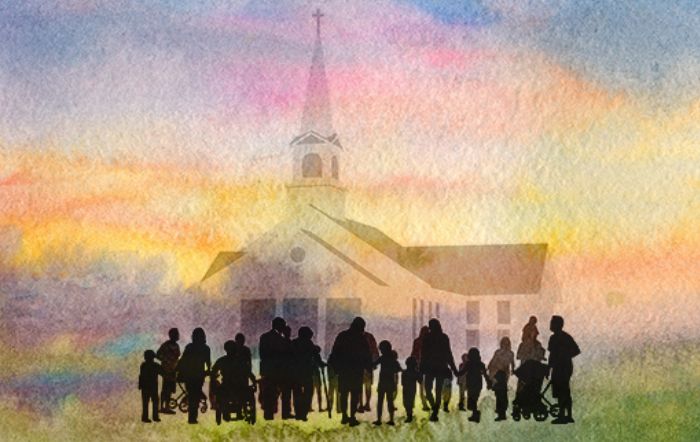
photo is by Bibimorvarid

It should absolutely be a concern in our preaching. That doesn’t mean that we’re being emotionally manipulative, just that we’re preaching to the whole person.
If we approach preaching in the same manner as writing an essay, it doesn’t matter how solid our findings are. Showing emotion when preaching helps affirm that you actually care about what you’re saying. Do the research, sure. But show the folks you’re talking to that it matters to you. That’s not manipulative. It’s just honest.
Oh…for a few months, I haven’t been able to post comments to your blog from either of my Macs, but this old Dell seems to work just fine. Thought you should know.
Hmmm… how odd. Thanks for letting me know. I use a mac. I wonder why it’s not a problem for me. I probably need to do a whole blog overhaul…
Glad you’re back!
Narrative preaching isn’t that new, and I think it was relevant prior to our current era of easy-facts. In fact, narrative preaching is already being called outmoded in some circles. Barbara Brown Taylor, Lowry, Craddock, Buechner etc… they’re already the names of last generation.
Narrative preaching isn’t a fad though. It IS preaching. Preaching has never been about fact-gathering. It has always been about the Gospel – which is a story. Preaching is an encounter, not a lecture, a journey, not a thesis.
It astounds me how often the question of “emotionalism” or manipulation comes up in conversations about preaching. How does one preach without emotion? Emotion isn’t something one “puts on” anymore than my voice or my face is something I just “put on”. It is a vehicle for communication. You are using it whether you want to or not. No matter how restrained your emotions, they are present. A dry dissertation of a sermon is every bit as capable of being manipulative as a flamboyant fiery one.
This is a fascinating conversation because it seems like something of a convergence. I’ve been working through Philip Clayton’s “Transforming Christian Theology” which really makes the case for the decentralization of theology–putting it back in the living rooms and bars–perhaps even the blogs–than locked in the Ivory Tower.
What isn’t in that book, but what I think you’re alluding to is the implications of this on the preaching event. When congregants can (and actually are) tweeting out quotes and 140 or less on-liners from sermons or fact-checking the documentary hypothesis on a smart phone than the tide has shifted–unless there’s something else going on.
If preaching is more street theater–if it’s freed up to play to the emotions in the same way Arthur Miller or Tennessee Williams would. If it’s visceral enough to be art and not a Wikipedia stub on Genesis 22–than the story can live and move and have it’s Being.
I wonder if, besides preparing folks for this in preaching, we ought to be helping them dream up new ways to stir up and then capture the homiletical imagination of the people–it might even add to our worship.
I don’t think theology ever really was ruled by the academics. Academics just thought it was and teach seminarians it is. The tectonic shifts that shape Christian theology and practice have always started in the grassroots. When I did my doctoral dissertation on Juan Luis Segundo, I had to fight for the subject matter. My professors told me liberation theology wasn’t respected in academic circles and was a fad. My response: it has changed not only lives but entire nations in latin america. How many in academia say the same?
In like manner, feminists insights into the sexist interpretations didn’t start in seminaries and universities. They started in pews.
So the decentralization of theology began a long time ago, even before Jesus, when the prophets were outside the walls of the religious establishment railing against various things. All of this is more reason for most of our time to be spent in the community. In my ministry, it is there I find God changing the way we think and act.
I can’t speak for any other seminary, but I believe this reality is part of our preaching instruction at Columbia Seminary in Decatur, GA. Let me give you an example. Early on in preaching class, we are told to “live with the text,” allowing it to stir things up in us and raise questions in us long before we go to consult a commentary to find out the latest historical-critical mumbo-jumbo about a topic.
One of our first assignments was to do a “dislocated exegesis,” where we take our Bibles into a public place in Atlanta and read the scripture for an hour either out loud or silently to ourselves. In the waiting room at the hospital, in the social security office, on the street corner in the business district, new parts of God’s story come to life and begin to interact with our own lives and we see how they are relevant to the context in which we live.
We are taught that all we have as preachers is our testimony. We have God’s word, we look at it, we see something in it which changes us, we proclaim that to the world.
Educators know that we learn better when we are emotionally engaged – i.e. we learn what we care about. A good sermon emotionally engages the listeners and hopefully they come away with a memory of an experience in which they learned a new way to understand themselves, scripture, the church, their society, etc.
Frederick Buechner would love this conversation, he was a preaching style I studied in seminary; C.S. Lewis I think would also have some great input into this Blog. Stories are based in the Sub-consciuos, where is that facts are based in the Conscious. I am a Christian Educator that leads a Godly Play curriculum, and I have led the Workshop Rotation model, and stories are at the basis of both these curriculums. The fact that Carol touches on is the MOST central aspect of the Jewish Faith; the oral tradition…..this was how faith was passed from generation to generation, and when they were forced into Exile, this is what sustained them as a people and Faith. We as Presbyterians are somewhat in Exile, from the years of Big attendance and relevance….those days are but a memory, now we have moved forward faithfully clinging to our Polity and routine, stories and Spiritual development are a way back to relevance in worship and C.E.
Carol,
Just wanted to say relative to Mac use comment above, I have used a Mac the entire time I have been reading this blog and never had a problem seeing the comments or posting comments. I also use Firefox, not Safari. I have an iMac,about 3 years old, snow leopard operating system and other updated programs. Have no clue as to why “Beloved Spear”’s macs can’t post comments.
Janet
In reply to THE PLOT THICKENS about stories, as a Cherokee, stories and storytelling has been a major part of my life since the day I was born(43 years ago). In fact, my grandfather used stories, illustrations, and object lessons to teach me about Jesus Christ and salvation. I came to a full understanding of it when I was 10 years old, sitting in the woods with Pa Paw. Granted, I will never understand WHY God loves us that much, or all of the ”mystery” surrounding spiritual things. I can only go on my own experiences, and what God revelas in His Word.
It should absolutely be a concern in our preaching. That doesn’t mean that we’re being emotionally manipulative, just that we’re preaching to the whole person.
If we approach preaching in the same manner as writing an essay, it doesn’t matter how solid our findings are. Showing emotion when preaching helps affirm that you actually care about what you’re saying. Do the research, sure. But show the folks you’re talking to that it matters to you. That’s not manipulative. It’s just honest.
Oh…for a few months, I haven’t been able to post comments to your blog from either of my Macs, but this old Dell seems to work just fine. Thought you should know.
hmmm… thanks for letting me know. I use a mac, so that’s strange, but I need to do a site overhaul soon… so hopefully it won’t be a concern much longer. I’m glad you were able to be back in the conversation!