johy-yawa.jpg

Drew Ditzel, a student at Columbia Seminary and the Middle School Director at Peachtree Presbyterian, is conducting a blog/research/conversation for a class on “Emerging Church Models.” Including Drew, seven different bloggers are participating: Josh Brown, Julie Clawson, Adam Walker Cleaveland, Wess Daniels, Anthony Smith, and me. You can read his intro, and join in with the conversation on the other blogs as well.

Drew talks about his worries regarding pastoral leadership, namely that he’ll be elevated by position and won’t be able to have a real community or friendship in his church. He also hates the thought of being a facilitator, someone who finds just the right program so that a person can follow Jesus. So, he’s attracted to the emerging church. He doesn’t want to become a “professional Christian.”

The emerging movement is one of friendship. It’s that powerful, loving covenant between people that forms us and informs us. It reminds us that we’re not our own, but we have responsibility to one another, to care for each other in the deepest ways. In a new generation, friends have become more important. As we move from one place to another, farther and farther from our families of origin, as we try to find some stability in our sputtering careers, we’ve learned to rely on our friends in meaningful ways.

I always remember what my precious friend, Sue Duffy, told me. I was in college and celebrating Thanksgiving with her and my fiancée at an Indian restaurant. She rolled her wheel chair from the nursing home to this restaurant in downtown Chicago. Brian opened the door as I manuevered her chair over the threshold. The air suddenly billowed with the smell of beans and rich curry. Sue turned to me and said, “You have the family that you were born into, and you have friends–the family you choose. Thanks for being my family.”

I smiled at my husband, knowing what she said was true. For years to come, I became more intentional about my friendships. I enjoyed them more. And I began to realize what a gift it was when I lived in the same town with my friends and was able to share my life with them.

Friendship within a community of faith can become even more significant, because the picking and choosing has been taken out of the equation. So often God draws together an eclectic group–people that we would never, otherwise, have contact with. This makes our worshiping bodies unique, because friendships form in the oddest places: across generations, political spectrums, socio-economic divides, and ethnic differences. The Holy Spirit moves through the bond of friendship, strengthening the Body of Christ in amazing ways.

I’ve always been friends with people in my church, and I don’t have a particular sense of an elevated position. The members of my congregation usually have a much better education than I have. They make more money than I do, and they’re a whole lot more powerful than I am. It would be a little ridiculous if I thought of myself as on some higher plane.

Yet, they have called me to be their leader. It’s not my hobby. It’s my career, it’s a sigificant part of my life, and I have to be paid. In Louisiana, I tried doing the job with very little pay–full-time for 15k a year. It didn’t work. And, after many years, I’ve learned to be comfortable with that position. It’s not how I was raised (as a former Southern Baptist, it was drilled into my head that women had to submit at all times to men, and they certainly couldn’t be ministers), but it’s authentically who I am.

I walk into any group, anywhere, and by the time that our work together concludes, I’m the pastor. Even when I don’t mean to be the pastor, at the end of the day, I’m counseling, guiding, helping, and leading people. I’m a big-picture person. I love to imagine how things could be, how they ought to be, and I can’t wait to figure out a plan on how to get there. It’s just who I am.

(Although it’s not always true with my clergy friends. I’m not the pastor with them. And I cherish that.)

It may not be this way with every gathering, but our congregation needs leaders. Paid pastoral leaders. In our church of 250 members, we’re all working very hard. We feed 250 homeless men and women every morning. We’re building a health clinic in Ethiopia. We’ve begun art programs for homeless children and ministries to prostitutes. We have a ministry to the GW campus. All of these are ways in which we live out the reign of God in our world, and they would suffer without the pastoral staff.

I’m a friend to the people in my congregation. That’s certainly the best way to describe our relationship.

But…I wouldn’t be honest if I said that was the whole story. It’s a very risky way to do ministry. I know why so many pastors have built up the boundaries and walls. Even when you don’t want them to, the stones can stack up after years in the ministry.

Friendship means that we’re vulnerable. As a pastor, I’ve come home devastated many times, with reports of a damaging complaint, or after hearing about a scheme, or seeing a brutal attempt to sabotage. I’ve been called some terrible names….

As soon as I’m home, I slip in the door, drop my bag, and lean up against the wall. With my hand over my chest, I take a deep breath, and try to explain to my husband what happened. And somehow, the first thing that always comes out of my mouth, when the tears start to well up in my eyes: “I thought that we were friends….”

And, I tell you, there’s no worse feeling than being betrayed by a friend.

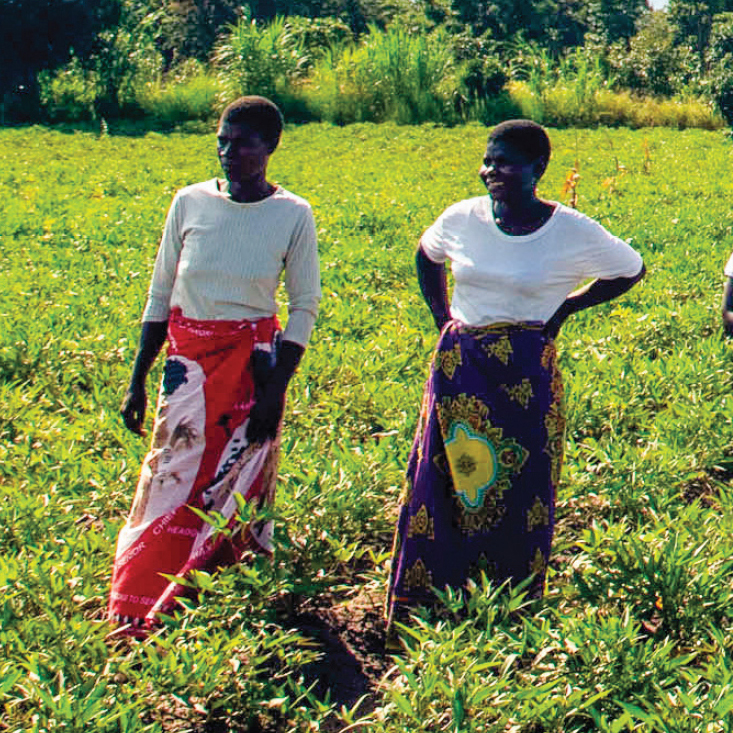
the photo’s by Jody Yawa

  • Share/Bookmark